Performance, Maintenance, Common Problems, and What Owners Should Know
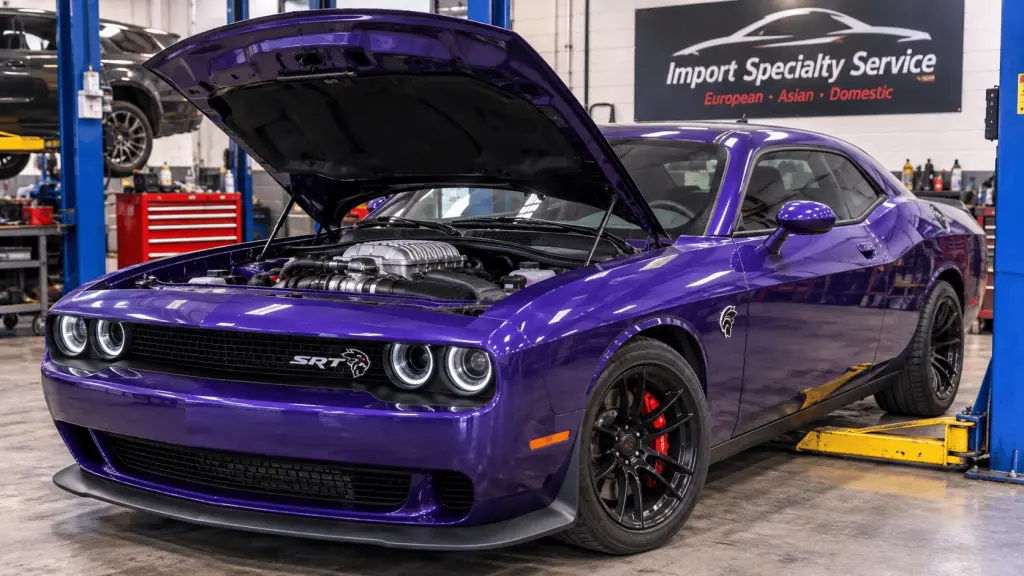
The Dodge Challenger SRT Hellcat is one of the most recognizable American muscle cars ever produced. With its supercharged HEMI V8 engine, aggressive styling, rear-wheel-drive platform, and impressive horsepower, the Hellcat delivers a driving experience built around performance.
However, owning a high-performance vehicle involves more than enjoying its acceleration. The Hellcat requires proper maintenance, attention to its cooling systems, quality tires, reliable brakes, and regular inspections to help maintain its performance and dependability.
Whether you are considering purchasing a used Dodge Challenger SRT Hellcat or already own one, understanding its engineering and maintenance requirements can help you make informed decisions about ownership.
This guide covers the Hellcat’s performance, important maintenance considerations, potential problems, and what to look for when choosing a repair shop.
What Is the Dodge Challenger SRT Hellcat?
The Dodge Challenger SRT Hellcat is a high-performance version of the Dodge Challenger developed by Dodge’s Street and Racing Technology (SRT) division.
Introduced for the 2015 model year, the original Hellcat featured a supercharged 6.2-liter HEMI V8 engine that produced 707 horsepower and 650 lb-ft of torque. Later versions and special editions offered additional performance.
Depending on the model year and configuration, the Challenger Hellcat was available with different transmissions, performance packages, and power outputs.
The vehicle became popular among muscle car enthusiasts because it combined classic Challenger styling with modern performance technology.
Key features include:
- Supercharged 6.2-liter HEMI V8 engine.
- Rear-wheel-drive configuration.
- High-performance braking system.
- Performance-tuned suspension.
- Advanced engine and vehicle management systems.
- Distinctive SRT exterior and interior styling.
- Available manual and automatic transmission configurations, depending on model year.
The Hellcat is designed for drivers who appreciate powerful acceleration, distinctive engine sound, and traditional American muscle car styling.
How Much Horsepower Does a Dodge Challenger SRT Hellcat Have?
Horsepower depends on the model year and version.
The original 2015 Challenger SRT Hellcat produced 707 horsepower. The standard 2023 Challenger SRT Hellcat was rated at 717 horsepower, while the Hellcat Redeye and other special performance versions offered higher output.
The supercharged 6.2-liter HEMI V8 is the centerpiece of the vehicle. Its supercharger forces additional air into the engine, allowing it to produce substantially more power than a naturally aspirated engine of similar displacement.
The engine also relies on supporting systems that help manage heat, fuel delivery, lubrication, and drivetrain loads.
These systems are important because high horsepower places additional demands on the vehicle, particularly during aggressive acceleration or repeated high-performance driving.
How Does the Hellcat Supercharger Work?
The supercharger is one of the defining features of the Dodge Challenger SRT Hellcat.
Unlike a naturally aspirated engine, which draws air into the cylinders through atmospheric pressure, a supercharged engine uses a mechanically driven compressor to increase the amount of air entering the engine.
More available air allows the engine management system to deliver the appropriate amount of fuel and produce greater power.
The Hellcat’s supercharger operates alongside an air-to-water charge-air cooling system. This system helps reduce the temperature of the compressed air before it enters the engine.
Important components include:
- Supercharger assembly.
- Supercharger drive belt.
- Charge-air coolers.
- Intercooler coolant circuit.
- Electric intercooler pump.
- Related hoses and connections.
Because these components work together, a performance or cooling problem should not automatically be blamed on the supercharger itself.
Proper diagnosis is important before replacing expensive components.
Common Dodge Challenger SRT Hellcat Problems to Watch For
The Hellcat is engineered for high performance, but like any vehicle, it can develop mechanical problems as it ages or accumulates mileage.
Maintenance history, driving habits, modifications, and previous repairs all influence the condition of an individual vehicle.
Here are several areas owners should monitor.
1. Supercharger and Belt Problems
The supercharger depends on a properly functioning drive system. Belt wear, damaged pulleys, bearing problems, or other mechanical issues can affect operation.
Potential warning signs include:
- Unusual whining or rattling noises.
- Changes in expected boost performance.
- Visible belt damage.
- Unusual vibration around the supercharger drive system.
Not every supercharger noise indicates a failure. Some mechanical sounds are normal, so diagnosis should consider the specific noise, operating conditions, and vehicle history.
2. Cooling System Problems
The Hellcat produces considerable heat, particularly under demanding driving conditions.
Its cooling system includes components that regulate engine temperature, while a separate low-temperature circuit helps cool the supercharged intake charge.
Potential problems include:
- Coolant leaks.
- Damaged hoses or connections.
- Water pump problems.
- Cooling fan malfunctions.
- Intercooler pump problems.
- Restricted airflow through cooling components.
A problem with the engine cooling circuit is not necessarily the same as a problem with the intercooler cooling circuit. Both systems may need to be inspected when investigating temperature or performance concerns.
3. Transmission and Drivetrain Wear
The Hellcat’s high torque places significant demands on the transmission, driveshaft, differential, and other drivetrain components.
Hard launches, repeated aggressive acceleration, track use, and modifications can increase the stress placed on these systems.
Watch for:
- Harsh or delayed shifting.
- Unusual drivetrain vibration.
- Clunking during acceleration or deceleration.
- Fluid leaks.
- Unusual noises from the rear differential.
Transmission and differential concerns should be investigated before continued aggressive driving causes additional damage.
4. Brake Wear
A high-performance vehicle needs a braking system capable of managing substantial speed and heat.
Brake pads and rotors can wear more quickly when the vehicle is driven aggressively or used regularly for performance driving.
Signs of brake problems include:
- Squealing or grinding noises.
- Steering wheel vibration during braking.
- Longer stopping distances.
- Brake pedal pulsation.
- Uneven brake pad wear.
Regular inspections help identify worn pads, damaged rotors, and other braking concerns before they become more serious.
5. Tire Wear and Traction Problems
The Hellcat’s rear-wheel-drive layout and high horsepower make tire condition especially important.
Tire wear can increase with aggressive acceleration, hard cornering, poor alignment, and incorrect inflation pressure.
Owners should monitor:
- Tread depth.
- Uneven tire wear.
- Tire pressure.
- Sidewall damage.
- Tire age and condition.
- Differences between front and rear tire specifications.
Using the correct tires and maintaining appropriate pressure helps support handling, braking, and traction.
6. Engine Misfires and Ignition Problems
A high-performance engine depends on proper ignition, fuel delivery, and air management.
Worn spark plugs, failing ignition coils, fuel delivery issues, or other engine faults may contribute to rough running or misfires.
Common symptoms include:
- Rough idle.
- Hesitation during acceleration.
- Reduced engine performance.
- Check engine light illumination.
- Engine shaking or stumbling.
A diagnostic scan can help identify stored fault codes, but additional testing may be necessary to confirm the actual cause.
7. Oil Leaks and Lubrication Concerns
Proper engine lubrication is essential for a supercharged HEMI V8.
Oil leaks can develop around seals, gaskets, connections, and other engine components as the vehicle ages.
Owners should pay attention to:
- Oil spots under the vehicle.
- Burning oil smells.
- Visible oil residue around engine components.
- Unexpected drops in oil level.
- Oil pressure warnings.
Use the oil specification and viscosity recommended for the exact model year and engine configuration.
Dodge Challenger SRT Hellcat Maintenance: What Should Owners Prioritize?
Regular maintenance is essential for keeping a high-performance vehicle operating as intended.
The Hellcat has specific service requirements, and owners should follow the maintenance schedule in the owner’s manual for their particular model year.
Important maintenance areas include the following.
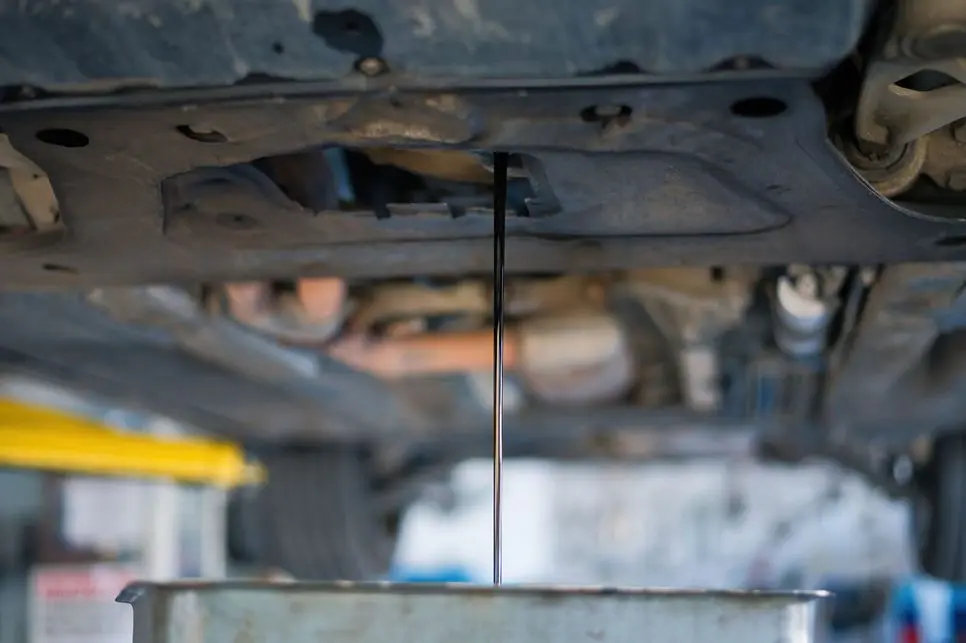
Engine Oil and Filter Changes
The supercharged HEMI engine requires the correct engine oil specification and a quality oil filter.
Oil changes should follow the manufacturer’s recommended intervals and account for driving conditions. Frequent short trips, high-performance driving, and other severe operating conditions may affect maintenance needs.
Do not assume every Hellcat model year has identical oil requirements.
Cooling System Inspections
Check the engine cooling system and the supercharger intercooler cooling circuit as applicable.
Inspections should include hoses, connections, coolant reservoirs, pumps, and other relevant components.
Use the specified coolant and follow the correct filling and bleeding procedures. The intercooler circuit may require a separate service procedure.
Spark Plug and Ignition Maintenance
Spark plugs are important for reliable combustion and consistent engine performance.
Follow the specified replacement interval for your model year and engine. If the vehicle develops a misfire, investigate the cause rather than automatically replacing ignition components.
Brake System Inspections
Inspect brake pads, rotors, calipers, brake fluid, and related hardware.
High-performance driving may increase brake temperatures and wear, making regular inspections particularly important.
Tire and Alignment Checks
Inspect tire pressure and tread condition regularly. Check alignment if you notice uneven tire wear, pulling, or changes in steering behavior.
The correct tire setup should match the vehicle’s model, wheel configuration, and intended use.
Battery and Electrical System
A healthy battery and charging system support the vehicle’s electrical components and engine starting system.
Have the battery, charging performance, terminals, and related connections inspected when starting problems or electrical warnings occur.
Is the Dodge Challenger SRT Hellcat Expensive to Maintain?
The Hellcat can cost more to maintain than an ordinary passenger vehicle because of its high-performance engine, specialized components, large brakes, and performance tires.
However, ownership expenses depend on several factors:
- Model year and trim level.
- Annual mileage.
- Driving habits.
- Previous maintenance.
- Tire and brake choices.
- Original or modified engine configuration.
- Parts availability.
- Labor rates and repair complexity.
Routine maintenance is only part of the overall ownership cost. Owners should also plan for performance tire replacement, brake service, insurance, fuel, and potential repairs as the vehicle ages.
A well-maintained vehicle with documented service history may be easier to evaluate than one with unknown maintenance or extensive undocumented modifications.
Buying a Used Dodge Challenger SRT Hellcat: What Should You Check?
If you are considering purchasing a used Hellcat, a professional pre-purchase inspection can help identify potential problems before you commit to the vehicle.
These cars are sometimes modified or driven under demanding conditions, so a clean exterior does not necessarily indicate that the mechanical components are in good condition.
A thorough inspection should consider:
Engine condition: Check for leaks, unusual noises, misfires, and evidence of improper modifications.
Supercharger operation: Inspect the supercharger, drive belt, related components, and cooling circuit.
Cooling system: Look for leaks, damaged hoses, coolant residue, and signs of previous overheating.
Transmission and drivetrain: Check for abnormal shifting, vibration, noises, and fluid leaks.
Brakes and tires: Evaluate pad and rotor condition, tire wear, and whether the installed components are appropriate.
Suspension and steering: Inspect for worn bushings, damaged components, alignment concerns, and unusual noises.
Vehicle history: Review maintenance records, accident history, previous modifications, and available repair documentation.
Diagnostic scan: Check for stored or pending fault codes and investigate any warning lights.
If the vehicle has aftermarket engine tuning, pulley changes, intake modifications, or other performance upgrades, ask for documentation showing what was changed and who performed the work.
Should You Modify a Dodge Challenger SRT Hellcat?
Some Hellcat owners choose to modify their vehicles to increase horsepower, improve handling, or personalize their appearance.
Common modifications include:
- Performance exhaust systems.
- Intake upgrades.
- Pulley changes.
- Engine tuning.
- Suspension upgrades.
- Brake improvements.
- Wheel and tire upgrades.
However, modifications can affect reliability, emissions compliance, warranty coverage, and the demands placed on supporting components.
Increasing boost or changing engine calibration can place additional stress on the fuel system, cooling system, drivetrain, and engine.
Before modifying a Hellcat, consider the intended use of the vehicle and whether the supporting systems can handle the changes.
It is also important to understand applicable emissions and road-use regulations before installing aftermarket equipment.
Why Professional Diagnostics Matter for a Hellcat
A high-performance vehicle should not be diagnosed using assumptions or a fault code alone.
For example, reduced engine performance may involve ignition, fuel delivery, air intake, supercharger operation, cooling, or electronic controls.
Similarly, a temperature-related warning may involve the engine cooling system or the separate intercooler circuit.
A proper diagnostic process may include:
- Reviewing the vehicle’s symptoms and maintenance history.
- Scanning the vehicle for diagnostic trouble codes.
- Inspecting relevant mechanical and electrical components.
- Reviewing available live data.
- Performing appropriate pressure, electrical, or mechanical tests.
- Confirming the source of the problem before recommending repairs.
Because the Hellcat is a specialized performance vehicle, owners should select a repair facility that has the equipment and experience required for the specific work.
Dodge Challenger SRT Hellcat Service in Nashville, TN
The Dodge Challenger SRT Hellcat is a specialized performance vehicle that requires attention to its engine, supercharger, cooling systems, brakes, tires, and drivetrain.
If you own a Hellcat in Nashville, TN, choosing a qualified repair facility is important. Before scheduling service, confirm that the shop has experience with the Hellcat’s supercharged 6.2-liter HEMI engine and the particular repair you need.
Import Specialty Service focuses on import and European vehicle repair in Nashville. If you own a Dodge Challenger SRT Hellcat, contact the shop to confirm whether your specific maintenance or repair needs fall within its service capabilities.
You can also explore the shop’s vehicle maintenance services or contact Import Specialty Service with questions.
Final Thoughts: Keeping Your Dodge Challenger SRT Hellcat in Good Condition
The Dodge Challenger SRT Hellcat combines powerful supercharged performance with classic American muscle car styling. However, maintaining that performance requires more than occasional oil changes.
Regular inspections, correct fluids, cooling system maintenance, healthy brakes, properly maintained tires, and timely diagnostics all play important roles in long-term vehicle care.
Whether you are buying a used Hellcat or maintaining one you already own, keep detailed service records and address unusual noises, warning lights, leaks, and performance changes promptly.
The right maintenance approach can help you enjoy the Hellcat’s performance while making more informed decisions about its long-term ownership costs.
FAQs
How much horsepower does a Dodge Challenger SRT Hellcat have?
The original 2015 Challenger SRT Hellcat produced 707 horsepower. Later versions varied, with the standard 2023 Hellcat rated at 717 horsepower. Redeye and other special editions offered higher output.
What engine does the Dodge Challenger SRT Hellcat have?
The Challenger SRT Hellcat uses a supercharged 6.2-liter HEMI V8 engine. Exact specifications and output vary by model year and version.
Is the Dodge Challenger SRT Hellcat reliable?
Reliability depends on maintenance history, driving habits, modifications, mileage, and the condition of individual components. Regular maintenance and proper diagnosis are important for long-term ownership.
How often should you change the oil in a Hellcat?
Follow the oil-life monitoring system and the maintenance schedule in the owner’s manual for your specific model year. Oil requirements and service recommendations can vary, and demanding driving conditions may require more frequent attention.
Does the Hellcat have a separate intercooler cooling system?
Yes. The supercharged 6.2-liter engine uses a separate low-temperature cooling circuit for its charge-air cooling system. This system has components that should be inspected and maintained according to the applicable service procedures.
What fuel does a Dodge Challenger SRT Hellcat require?
Fuel requirements depend on the model year and version. Some official Hellcat specifications require premium 91-octane gasoline. Always follow the fuel requirements stated in the owner’s manual for your particular vehicle.
What are common Dodge Hellcat maintenance concerns?
Important areas to monitor include engine oil, cooling systems, supercharger components, spark plugs, brakes, tires, battery condition, and drivetrain components.
Is the Dodge Challenger Hellcat expensive to maintain?
It can be more expensive to maintain than a typical passenger vehicle because of its performance engine, specialized components, brakes, and tires. Costs depend on mileage, vehicle condition, driving habits, and parts requirements.
What should I inspect before buying a used Hellcat?
Have the engine, supercharger, cooling systems, transmission, drivetrain, brakes, suspension, tires, and electronics inspected. Review maintenance records and investigate any aftermarket modifications.
Can a regular mechanic work on a Dodge Challenger SRT Hellcat?
A qualified mechanic can handle certain routine services, but specialized repairs may require experience with supercharged HEMI engines, appropriate diagnostic equipment, and model-specific service information. Confirm the shop’s capabilities before scheduling complex work.